Welcome to Clinton’s historic downtown! On this walking tour, you will learn about our town’s history, see photos from the past, and discover interesting stories from throughout the centuries.
Explore 15 points of interest on this tour, each rich with history and significance. While you can visit them in any order, following the suggested route offers a pleasant walking experience, with historical insights that build upon each other at every stop. The entire tour can be completed in under an hour. A downloadable, abridged booklet version is available below, along with a full online guide.
The online version features more information, additional photos, and extra stories. We encourage you to view, share, and review it!
Special thanks to the existing and ongoing efforts of local historians like David Yates and Pam Stanley, whose work made this tour possible. Thank you also to the many Clinton and area residents who shared their photos, stories and feedback during the research and creation process.


Bank of Montreal – Yankee Reid’s Tavern
Stop 1 at 4 Victoria Street
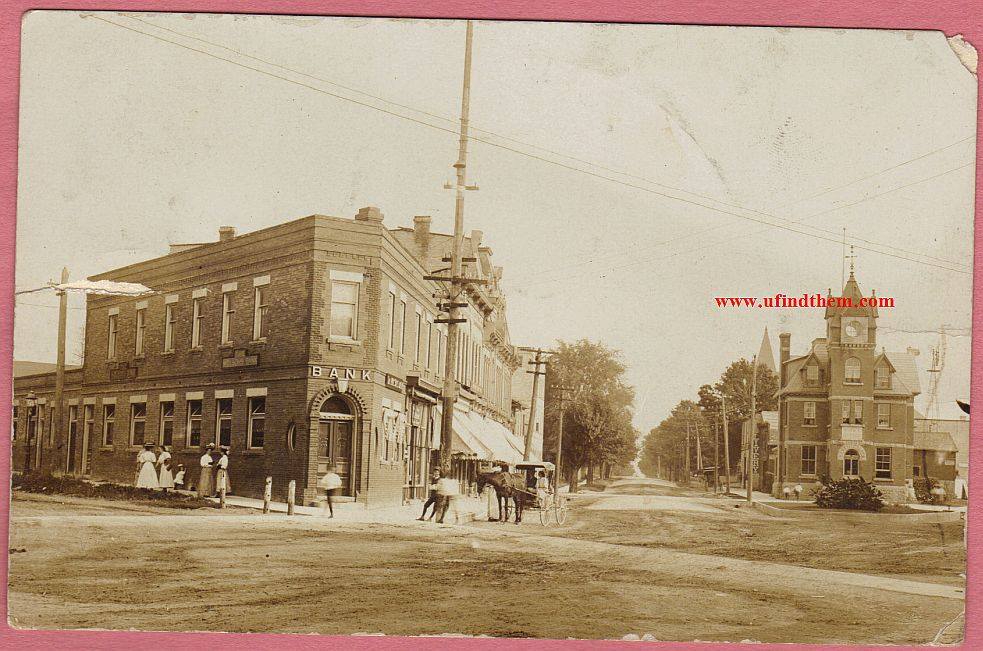
Peter Vanderburgh and Jonas Gibbings were the first to establish in Clinton. Vanderburgh built a log cabin in this spot in the 1830s. Back then, Clinton was nothing more than an intersection known as “The Corners.” In 1837, the tavern was bought by an American nicknamed “Yankee Reid.” Yankee Reid’s Tavern was so popular that people would visit from miles around.
In the 1840s, William Rattenbury bought the tavern. Rattenbury is known as the founder of Clinton. He mapped the streets and started selling lots in 1855. Clinton was incorporated as a village in 1858. In 1872, Rattenbury’s son Isaac built a new hotel down the street (Stop 2). The original hotel, known as the Clinton Hotel, was left behind here.
By 1877, most of the building was taken apart. The stables moved to the tracks for a storehouse and another part went to King St. for a broom factory. After a fire in 1903, a two-storey building was constructed for storefronts (see photo). It was eventually demolished to make way for the building you see today.
Subway Plaza – Hotel Clinton
Stop 2 at 31 Victoria Street
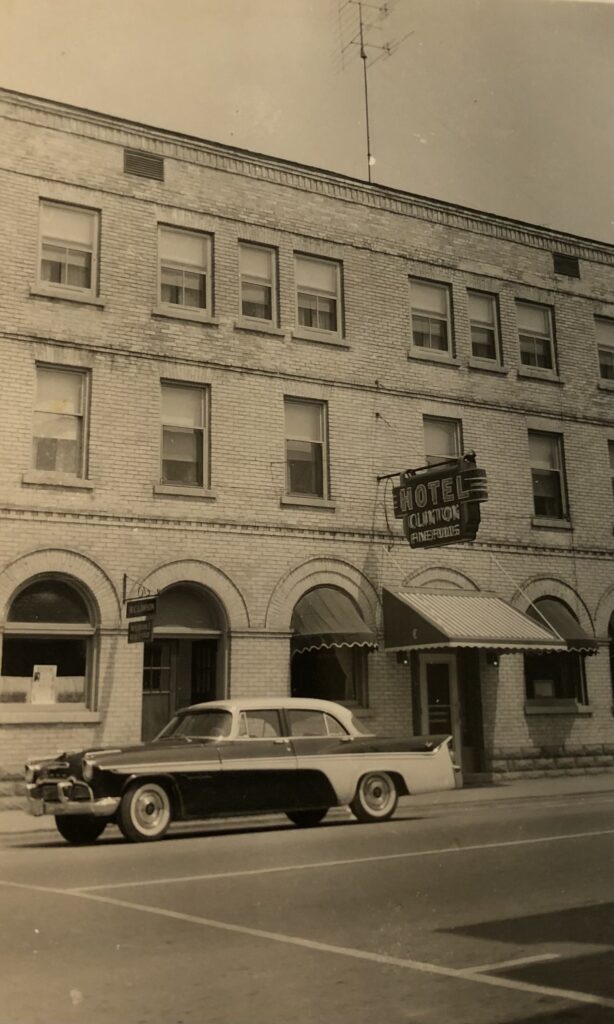
Isaac Rattenbury first built a hotel here in 1872 and it went by many names over the years. As business boomed, the building expanded and gained additional storeys. Like many buildings in town, Hotel Clinton fell victim to the huge fire in 1907 (Stop 4). The stables on the back facing Highway 8 survived, thanks to some heroic efforts. The hotel was quickly rebuilt and reopened by the next year.
Hotel Clinton didn’t have a liquor lounge until 1959 when temperance laws were finally repealed in Huron County. The county had been dry since a referendum voted for the Canada Temperance Act in 1914, but temperance laws didn’t mean there was no liquor in Huron County! Bootlegging flourished and people could take a quick trip to Stratford or Grand Bend to get their liquor. Service personnel at the base in Vanastra were also able to enjoy the wet canteen on base property.
By 1959, Huron and Perth were the only dry counties left in Ontario. They voted to repeal the temperance act and joined the rest of the province in allowing government-controlled alcohol sales. Once Hotel Clinton had its Cloud Nine liquor lounge, it was one of the most popular places in town. The hotel burned down in 1980 and was not rebuilt but it lives on in the memories of many.
Post Office – Heartland Church Lot
Stop 3 at 52 Victoria Street
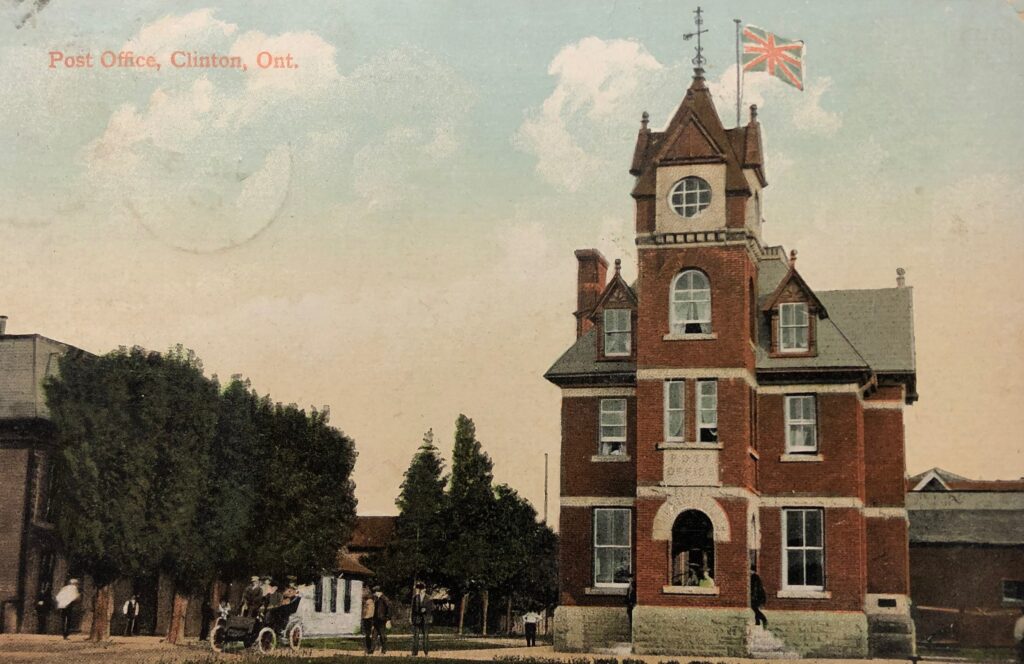
Many people in Clinton today have no idea there used to be a building here: a post office, built in the early 1900s. The postal service was in town long before that, however, since letters were the main way to communicate. By 1900, the postal demand was high enough for a building to be constructed.
The building was uniquely designed to fit the triangle shaped lot. With three storeys and a 75-foot tall tower, it was stunning for a town of Clinton’s size. The interior boasted white walls, panelled ceiling, and a large lobby, as well as the modern facilities of electric lighting and steam heating. When the post office opened in 1904, hundreds came to see it during a January blizzard.
In 1909, a clock was added to the tower on the outside of the building. The second and third floors of the building were home to the postmaster and his family. Over 61 years, only four postmasters called it home.
In 1966, Clinton’s current post office opened and the old building was offered to the town. However, the town wasn’t interested, so the building was demolished in 1967. The clock was moved to a residence outside of town.
Post Office – 1907 Fire
Stop 4 at 66 King Street
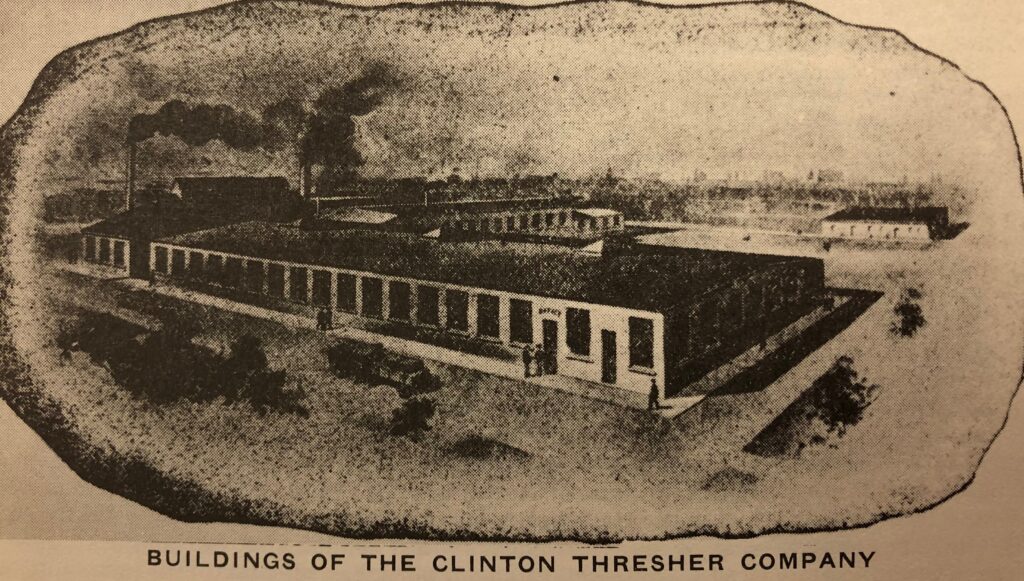
The most destructive fire in Clinton’s history started here on May 13, 1907. The Clinton Thresher Company (illustrated below) used to be located approximately where our current post office is. A tiny spark from the Thresher’s chimney, fed by strong winds, resulted in around 24 buildings in town catching fire. Brigades came from other towns to help, and they drained a pond dry with their hoses.
Crowds flooded in from surrounding townships to watch the fire. Every livery horse in Seaforth was hired out because so many people wanted to come see what was happening. People watched the town burn from the front lawn of St. Paul’s Anglican Church. One woman was so fascinated that she didn’t even notice her hat was on fire until her neighbour told her!
The fire became manageable as night set in and the winds died down. Other than the Clinton Thresher Company, almost all of the buildings that were destroyed by the fire were rebuilt. Still, the event was so devastating that it finally spurred the town to develop a better waterworks system so that something so destructive would never happen again.
Radar Auto Parts – Normandie Hotel
Stop 5 at 20 King Street
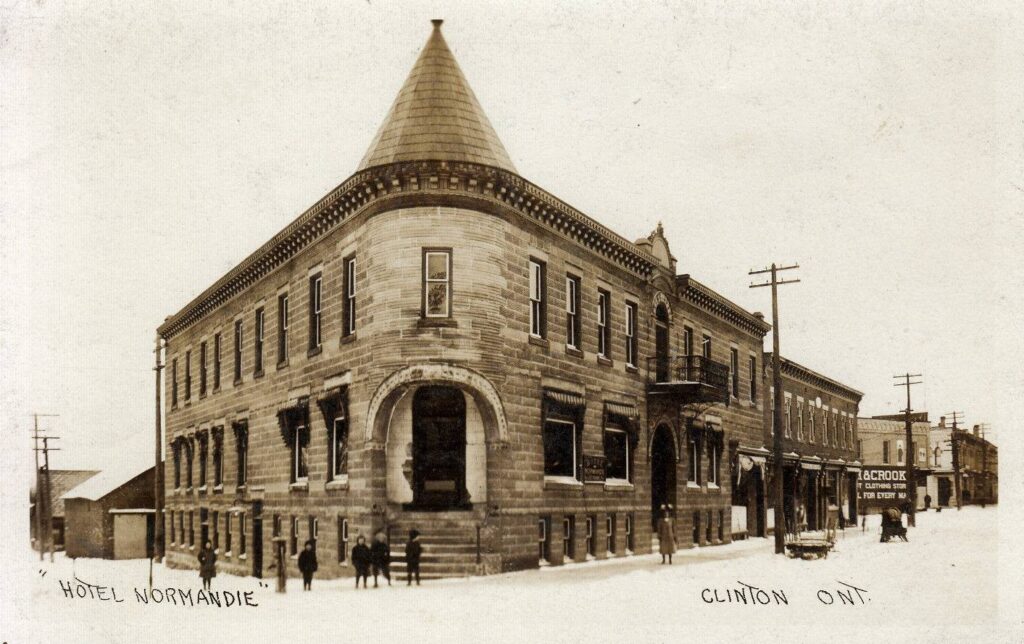
The first hotel in this location was built in 1878 and was known as The Grand Union Hotel. A horse-drawn omnibus would pick travellers up from the railway and bring them here for the night. In 1889, $1 would get you a comfortable room plus three meals. The hotel, then called The Clarendon, burned down in 1903.
The same year, Samuel Sloane Cooper purchased the spot to build a new hotel. Cooper was a prolific architect responsible for many iconic buildings in Clinton, including the library and the old post office. The Normandie Hotel opened in 1905 and upheld the same reputation as its predecessor for luxury and comfort. It was two storeys tall and had thirty well furnished rooms. The dining room could fit up to 75 people and often hosted local meetings and events.
The Normandie Hotel stopped operating by the late 1920s. As cars became more popular, people didn’t travel as much by train, so there was less need for railway hotels. For a time, the building was home to a silent movie theatre known as the Star Theatre before it closed around 1930. The building grew neglected, was put up for auction in 1946, and ultimately demolished when no one bought it.
Radar Antenna – Radar & Vanastra
Stop 6 at Traffic Island
In 1941, government officials were seeking a location for the first radar training school in North America. They needed a place remote from England where the base would be safe and secret. They settled on an area just south of Clinton and built roads and over forty buildings so that the Royal Air Force Radio School could open that same year. The Royal Canadian Air Force (RCAF) took it over from the British in 1943.
RCAF Clinton trained radar technicians and operators. Students received hands-on experience with over $5 million in equipment at the base. The purpose of the base remained top secret until after the war. Over the 30 years that the school operated, around 150,000 people graduated. They were known as the best in the field. In 1972, the base closed. A national contest was held to rename the area and Clinton resident Margaret Rudd won with “Vanastra.”
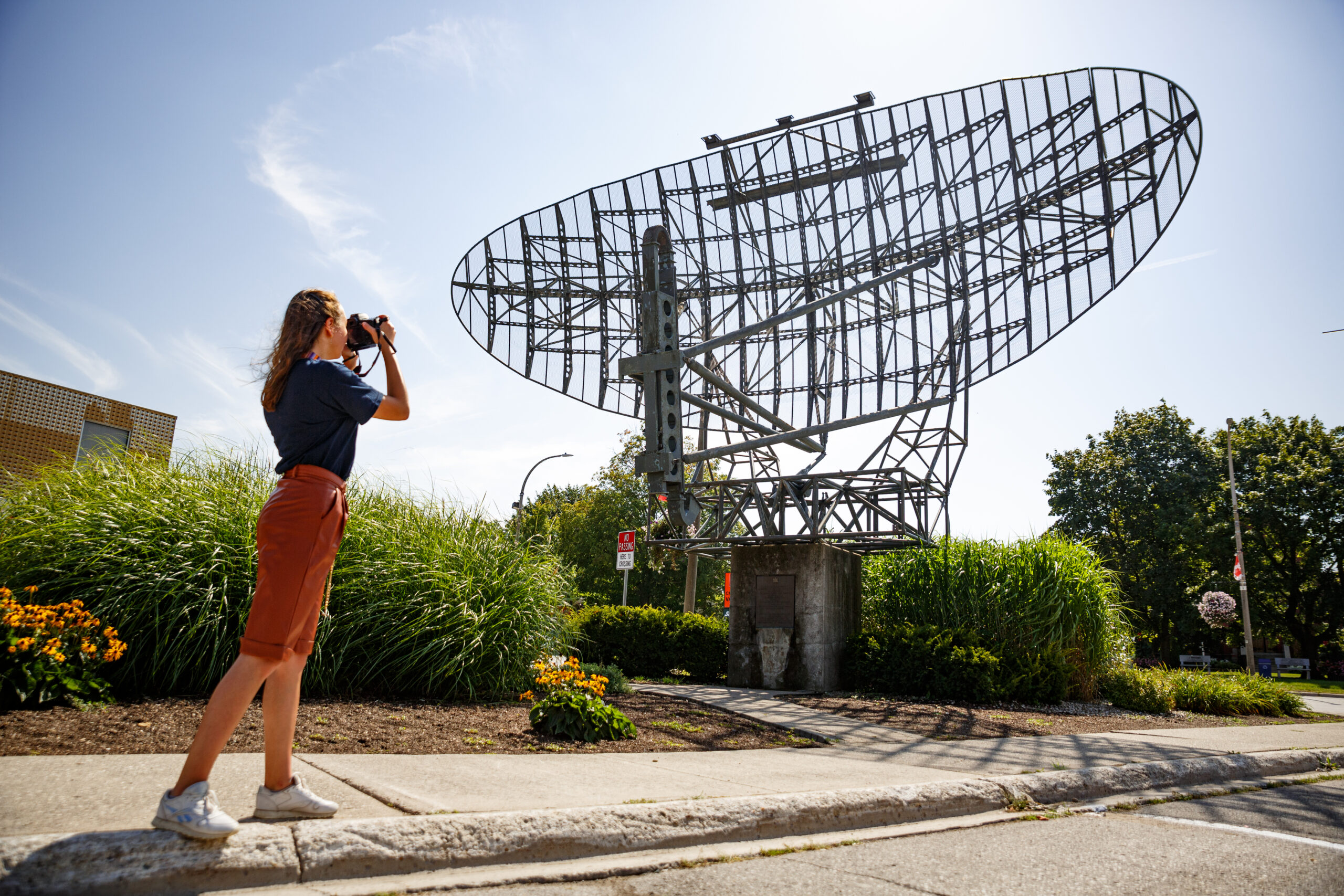
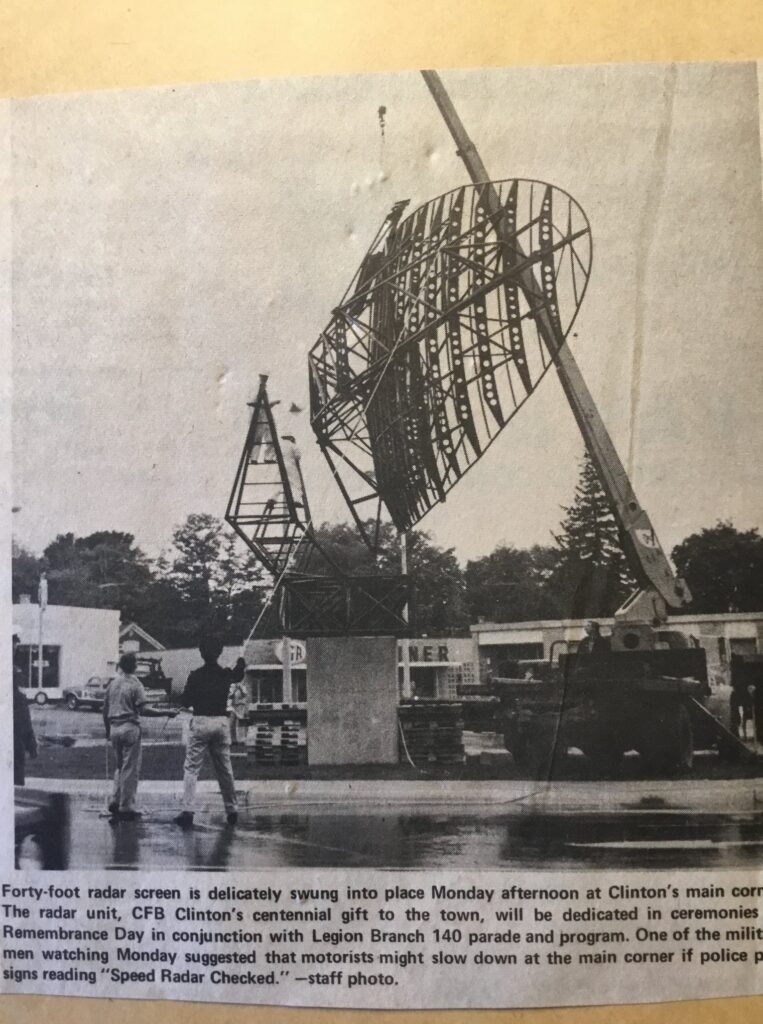
This radar antenna was given to the town in 1967 by service personnel. This specific antenna is from a system developed during the Cold War to detect incoming Soviet aircraft and missiles. It was once housed inside the radome, a golfball-like structure still visible if you drive south on Highway 4.
Clinton Sporting Goods – Groves TV
Stop 7 at 10 Huron Street
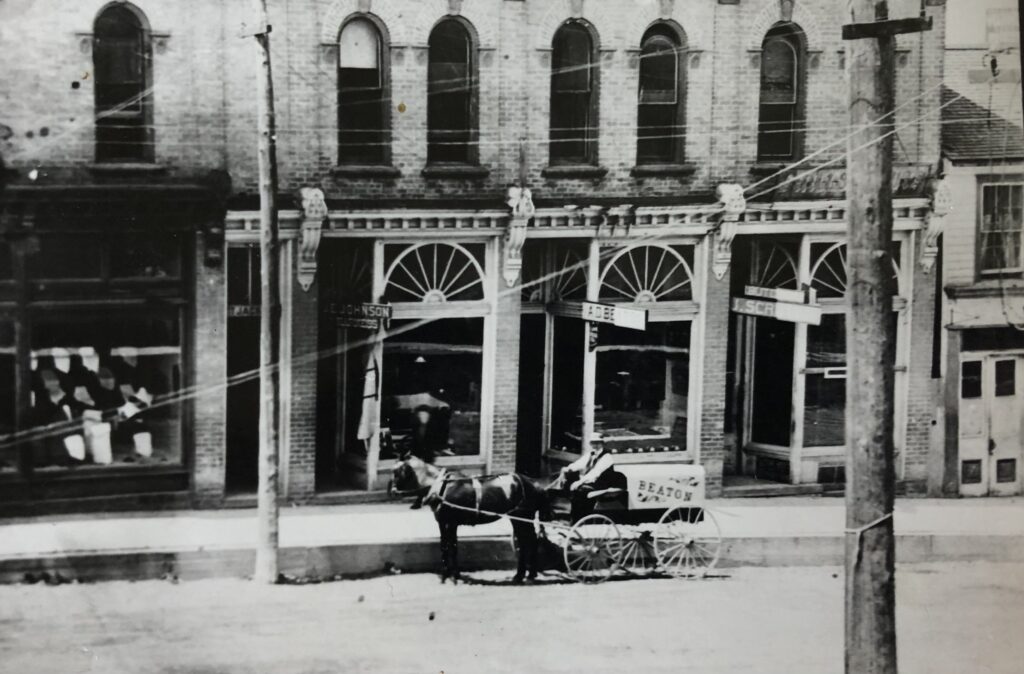
Arthur Groves started selling appliances out of his home on Princess Street in 1935. As his business grew, he moved into this location, currently home to Clinton Sporting Goods. In the late 1940s, crowds would gather on the street to watch the TVs through the storefront window, since this was the only TV many people had access to. Wrestling nights were so popular that onlookers would block traffic. The police had to ask Arthur to turn off the TVs for safety. A scene like this is found on the mural on the back of Town Hall.
Arthur’s son, Clayton, grew up helping out at the store and by 1962 had entered into a partnership. In 1979, they expanded to include a service shop and full-time technician, leading to their motto, “we service what we sell!”
Groves holds many ‘firsts’ in Clinton, such as being the first to sell TVs in town. They later sold the first colour TVs and the first satellite dish later still. In 2010, Dan Groves took over the business, fulfilling the father-to-son legacy that had started with his grandfather Arthur. Today, Groves TV is located on Highway 8 towards Goderich. They moved into this larger location in 2013.
Town Hall
Stop 8 at 23 Albert Street
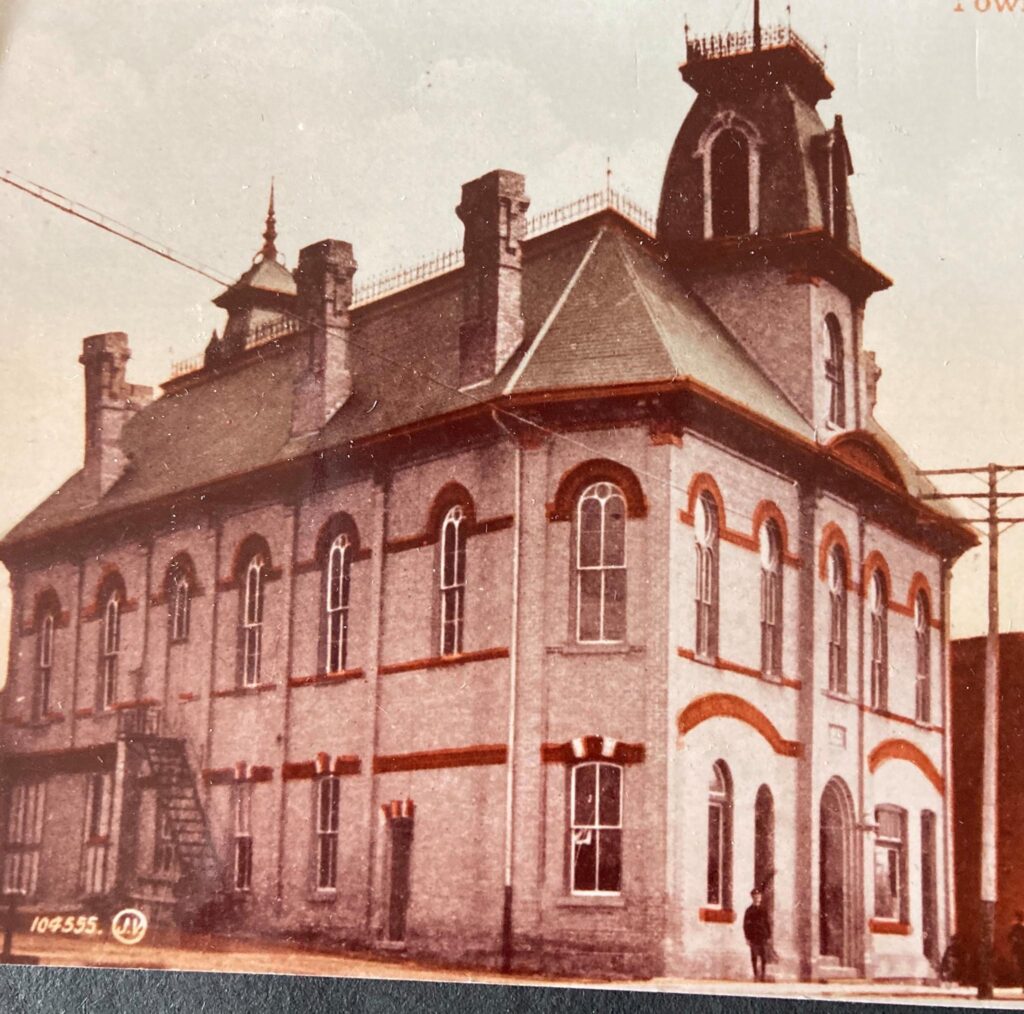
Clinton’s first town hall was built in 1870. It burned down in 1879. The following year, there were lively debates about where exactly the new town hall should be built on the lot. The new town hall was built in 1880.
Before the fire, a bell in town hall rang six times every day so people could keep track of time. After the 1879 fire, the bell was found as a melted hunk of metal. The St. Paul Anglican Church bell was used until a new bell could be installed. Daily bell ringing ceased by the 1960s. Today, the bell is still up there but hasn’t been rung in a long time.
By 1974, the town hall was an old building and had become very neglected. Only the first floor was used, while the second and third storeys were condemned and left to waste. The auditorium was home to dead bugs, bird nests, and broken windows. Once more, the town hall was the subject of debate: should it be torn down or renovated and restored?
Ultimately, the town decided to renovate the historic building and use it for offices. In 1982, the long-needed restoration was finally underway. It happened concurrently with the restoration of the library. The town hall was saved and the former police station and entrance way were added onto the back.
Library
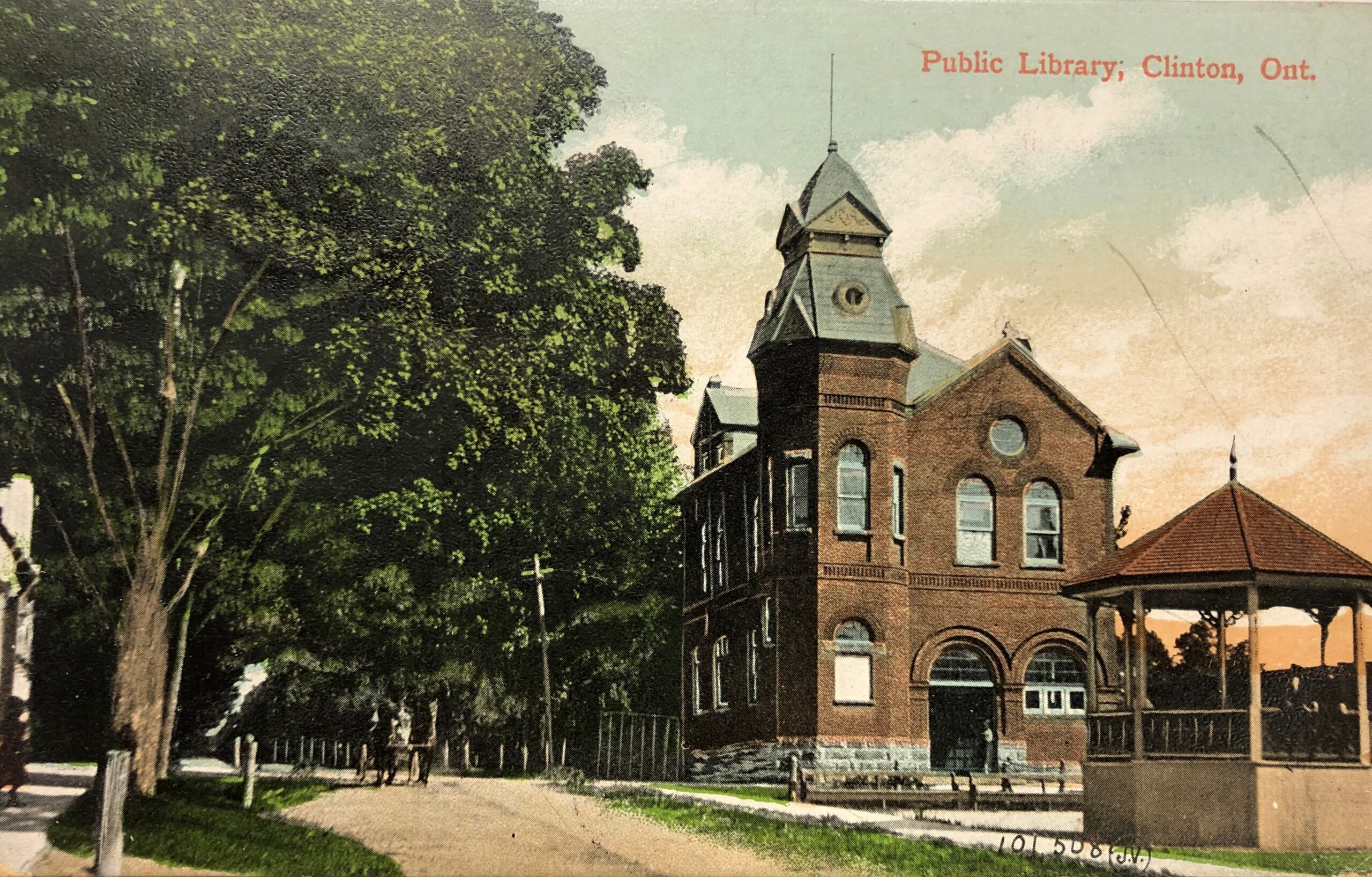
Stop 9 at 27 Albert Street
Clinton’s original library was called the Mechanics Institute. It was first located in Town Hall and thus was a casualty of the 1879 fire. Less than 250 books survived, but the library temporarily reopened in Victoria Block. In 1881, everyone was given free admission to the library space, but they couldn’t take books home unless they were a subscriber, which cost $1 a year.
In 1890, local resident James Stavely died with no living heirs. His money went to the government, who gave $10,000 back to the town for the construction of a library. The main section of the present library was built in 1900. Fifteen years later, Clinton received money from Andrew Carnegie, a multimillionaire famous for donating money for the building and improvement of libraries. This paid for the addition of the south wing of the library.
In 1982, the library building was deemed not structurally sound. The library moved to an empty hardware store on Albert Street with the help of volunteers and staff who moved over 21,000 books.
The library building was renovated at the same time as the town hall and both reopened in 1984. The second floor had been abandoned for some time but became the children’s library that it is today. The original oak circulation desk was restored.
Library Park
Stop 10 at 27 Albert Street
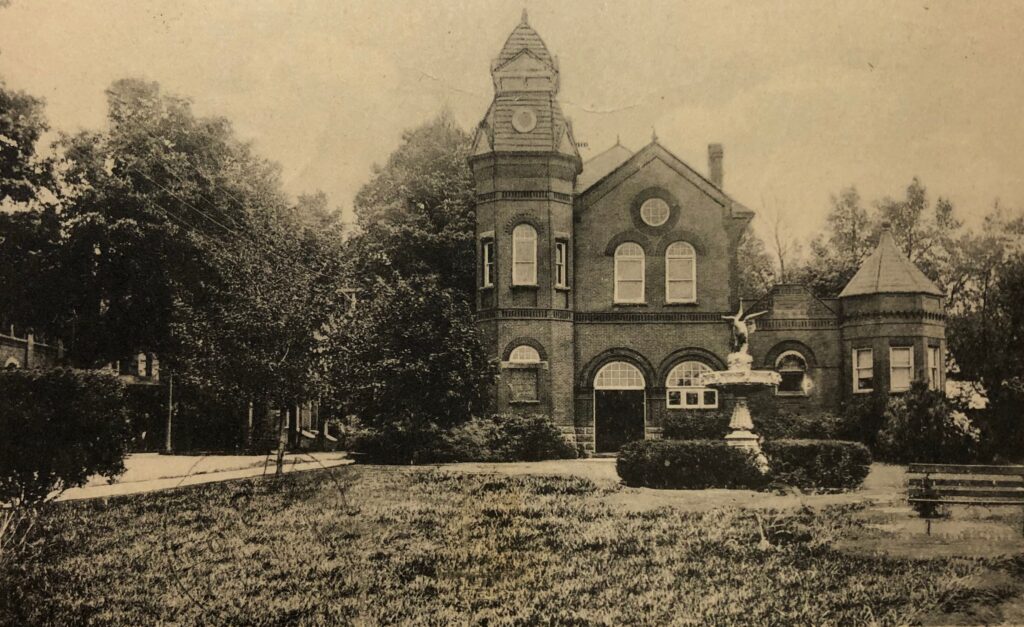
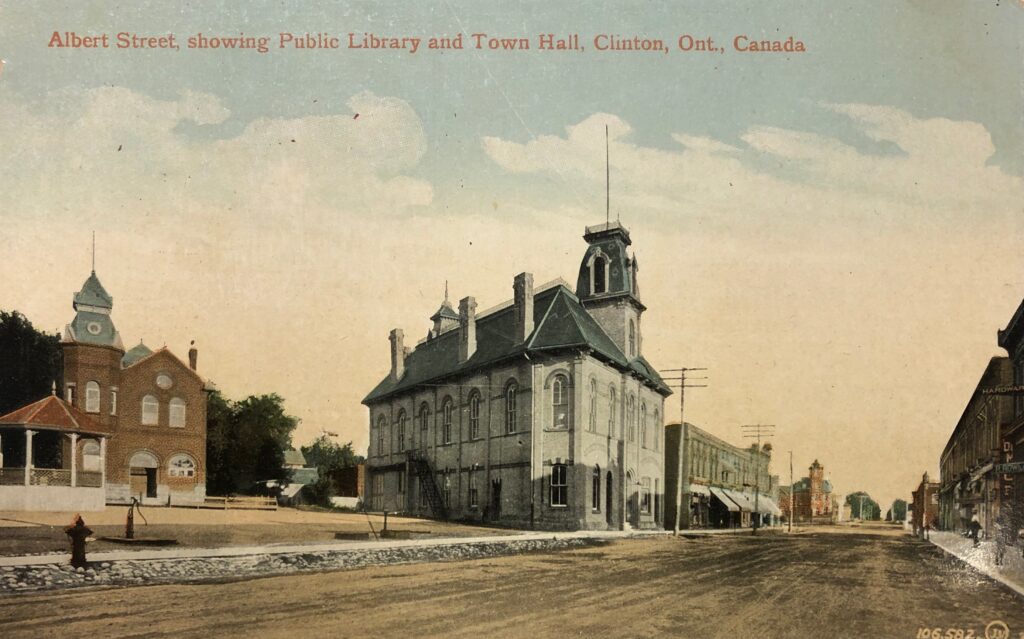
Clinton’s original library was called the Mechanics Institute. It was first located in Town Hall and thus was a casualty of the 1879 fire. Less than 250 books survived, but the library temporarily reopened in Victoria Block. In 1881, everyone was given free admission to the library space, but they couldn’t take books home unless they were a subscriber, which cost $1 a year.
In 1890, local resident James Stavely died with no living heirs. His money went to the government, who gave $10,000 back to the town for the construction of a library. The main section of the present library was built in 1900. Fifteen years later, Clinton received money from Andrew Carnegie, a multimillionaire famous for donating money for the building and improvement of libraries. This paid for the addition of the south wing of the library.
In 1982, the library building was deemed not structurally sound. The library moved to an empty hardware store on Albert Street with the help of volunteers and staff who moved over 21,000 books.
The library building was renovated at the same time as the town hall and both reopened in 1984. The second floor had been abandoned for some time but became the children’s library that it is today. The original oak circulation desk was restored.
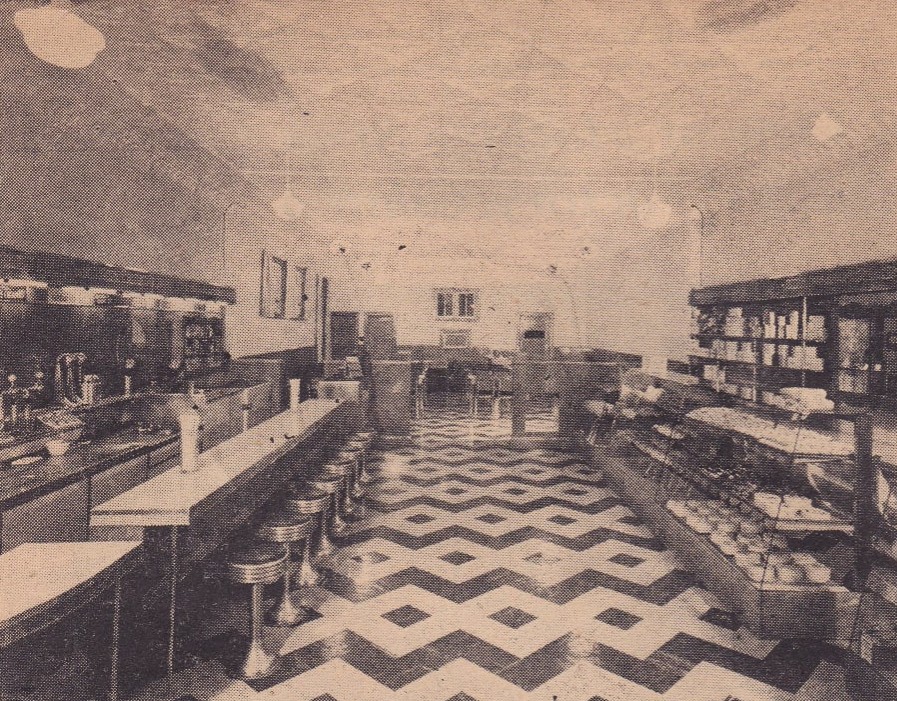
Bartliff’s Bakery & Restaurant
Stop 11 at 46 Albert Street
Harry Bartliff came from Brussels, where he originally worked at his father’s bakery. Harry set out on his own in 1902 and started his small business in the storefront where Marita’s is today (15 Victoria St). In 1906, he built a new building where Bartliffs has stood ever since.
People thought Harry was foolish for building on this corner since Clinton’s business core was further south at that time. Harry went ahead anyway and his choice proved to be a good one. In 1914, Harry had a bakeshop built onto the back of the building. His three sons, Elliott, Bruce, and Douglas, took over in 1946 and the building received another addition the following year.
Bartliffs originally did deliveries with a horse and wagon. When the sons took over, they expanded to eight delivery trucks that would go around the county. They were refrigerated, allowing them to carry all manner of baked goods and even ice cream. Delivery was discontinued in 1973. Although the business has changed many hands since then, it’s always been a staple in Clinton.
Excalibur Insurance – Roxy Theatre
Stop 12 at 56 Albert Street
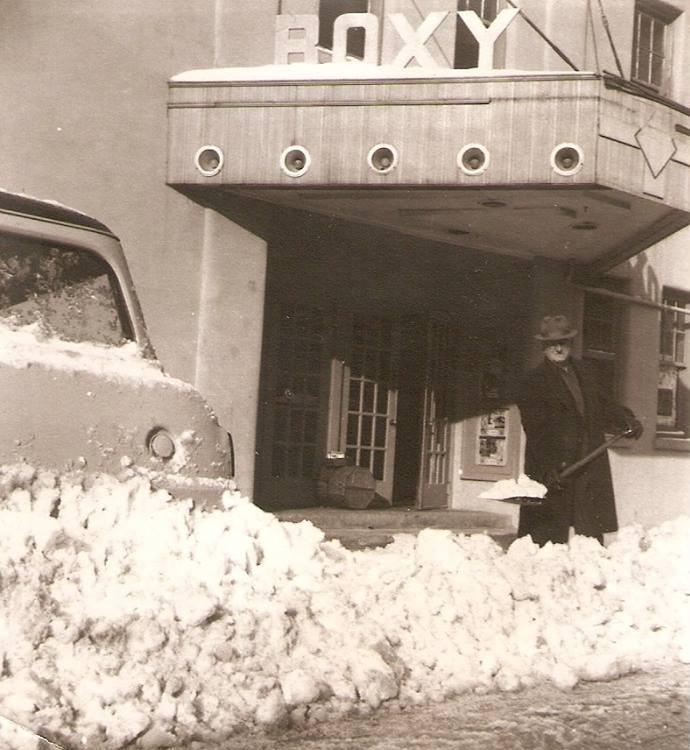
This building was once Clinton’s most beloved movie theatre! In 1936, the Roxy Theatre opened and quickly became a centre of social life in Clinton. People of all ages would come out to enjoy a film. The theatre could seat 260 people, and they would hold free matinees around Christmas so children could enjoy a show as their parents shopped for gifts in town.
Today many residents fondly remember their evenings at the Roxy. Kids would bring their 25 cent allowance, which was enough to get them admission and a bag of popcorn! Some kids would look for pop and beer bottles on the highways and use the deposit money to treat themselves to a movie.
Unfortunately, as television became more popular, small-town movie theatres struggled to survive. The Roxy closed on Boxing Day in 1959 after a final showing of the western movie, “Ride Lonesome.”
The Roxy was the first “talkie” movie theatre in town, but it wasn’t the first theatre! In 1907, the Wonderland silent movie house opened across the street in the old Clinton News-Record building. The Wonderland tried to show a different program every night, but they relied on trains to deliver the films, so if the train was late the theatre was out of luck! The Princess Theatre closed in 1923.
The Circus Academy – Fairholme Dairy
Stop 13 at 80 Albert Street
As far back as 1924, the Elliott family ran a dairy to serve Clinton. The farm was as close to town as possible so that the milk deliveries would be fresh. The milk was processed in the Elliott Dairy plant located here. When the Elliotts put the farm up for sale in 1940, Russell Holmes saw an ad in the newspaper and drove to Clinton immediately to buy it. Soon after, the Holmes family moved to Clinton to run the business, renamed Fairholme Dairy.
As late as the 1950s, a horse-drawn wagon was still used for milk deliveries. Deliveries were made six days a week so everyone could have fresh milk, since refrigeration was still in its early days. It took around five hours each day to deliver to everyone. People would leave their empty bottles on the front porch with metal tokens in them and the milkman would leave full bottles.
In 1958, Fairholme Dairy began using delivery trucks. They continued door-to-door delivery for the next twenty years before stopping due to rising expenses, the availability of milk in grocery stores, and government regulations requiring delivery trucks to be refrigerated.
Repurposed Artisan Designs – Vinegar Hill
Stop 14 at 79 Albert Street
If you look north, you can see a section of Highway 4 known as Vinegar Hill. In local newspapers, it was referred to with this name at least as early as 1915. Several stories (more folklore than fact!) have emerged to explain its origin.
One suggestion is that a man once had a combination vinegar plant and still near here. People would carry their containers up the hill (presumably for vinegar but perhaps for something stronger!) and over time the expression “going up the hill for vinegar” became “going up Vinegar Hill.”
Another possible story is about when people who lived outside of town would bring wood to sell at the market. Supposedly, an old woman stood at the top of the hill to stop wagons and ask for wood chips to put in a jar of vinegar. Team drivers left the woman lots of wood chips and soon called it “Vinegar Hill.”
The most commonly accepted story is that there once was a vinegar factory located near the hill. A delivery wagon carrying casks lost its load near the top of the hill. Barrels went crashing down, spilling vinegar everywhere.
The Dutch Store – Pickett & Campbell
Stop 15 at 55 Albert Street
The temporary population increase caused by the RCAF Clinton base drastically changed Clinton’s downtown landscape and atmosphere. Clinton bustled with life and many businesses thrived during the time. Stores would stay open on Saturdays until midnight! Businesses that catered specifically to the airmen were very successful.
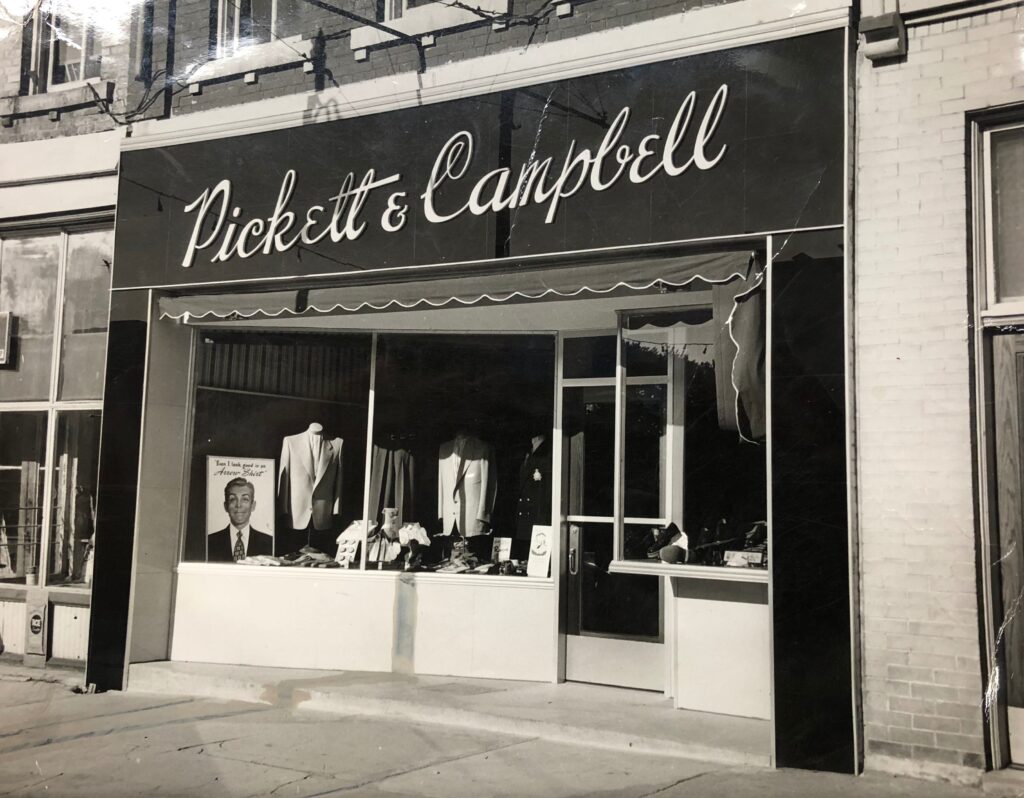
Custom made suits were all the rage, like those that could be purchased from custom tailors at Davis & Herman. Pickett & Campbell was one such men’s wear store and it was found in this location, which is The Dutch Store today. It was owned and operated by Ken Pickett and Robert Campbell.
At the back of the store, there was a specially constructed measuring room to give a sense of privacy. They had cone-shaped lights on the ceiling that could be pointed and adjusted to highlight different displays. Previously, a cold storage room for vegetables and fruit had been installed in the building. Pickett and Campbell used this to keep winter coats and furs through the summer. They moved to the main corner (1 Albert St) in 1953.